Hiring an offshore UX team works well for SaaS companies when three things are in place: enough working-hour overlap for live reviews, a contract that assigns all design IP to you, and a clear process with written updates and shared Figma files. Get those right and an offshore team can deliver senior UX work at a lower cost; get them wrong and time zones and handoffs eat the savings.
Disclosure: ProDesign has a delivery studio in Gujranwala, Pakistan and an office in Miami, United States, and works with clients in the US and Canada. This guide covers what we have learned, including the risks.
Why SaaS teams hire offshore UX teams
- Cost. Rates in many offshore markets are lower than in US or Canadian cities, so the same budget buys more senior hours.
- Speed to start. An established team can start within weeks, while recruiting in-house can take months.
- Range of skills. A team can cover research, UX, UI and design systems together.
- Extended hours. With some time-zone difference, design work can progress while your team is offline.
The trade-offs are communication, time-zone friction, legal protection and quality control. Each can be managed.
Time zones: how much overlap you actually need
You do not need a full shared day. Most SaaS design work runs well with two to four hours of overlap for live reviews, and written updates the rest of the time.
- Pakistan to US Eastern: Pakistan is UTC+5, so it is 9 or 10 hours ahead of New York depending on daylight saving time. Overlap usually falls in the US morning and the Pakistan evening.
- Pakistan to US Pacific and Western Canada: the gap is 12 or 13 hours, so overlap usually means early morning for one side or evening for the other.
- Ask any team for its stated overlap hours in your time zone, in writing, before you sign.
Practical habits that make time zones work:
- One fixed weekly review call in the overlap window.
- A short written update at the end of each working day: what was done, what is next, what is blocked.
- Recorded walkthroughs (for example Loom) for design reviews you cannot attend live.
- Comments in Figma rather than scattered chat threads.
Intellectual property and contracts
IP is the risk founders worry about most, and it is the easiest to fix on paper. Your agreement should include:
- IP assignment. All designs, files and deliverables belong to you on payment. Do not accept a licence where the agency keeps ownership.
- NDA. Signed before you share your product, roadmap or user data.
- File ownership. Figma files should live in your workspace, or be transferred to it, so you never depend on the agency’s account.
- Data handling. If the team sees real user data or analytics, agree how it is stored and when access is removed.
- Governing law and payment terms. Clear milestones, what happens if you end the contract early, and which country’s law applies.
This is general guidance, not legal advice. Have your lawyer review the contract.
Process: what a good offshore engagement looks like
- 1. Discovery. A call to understand your product, users, metrics and constraints. The team should ask about your developers and tech stack early.
- 2. Audit or research. A UX audit of the key flows, ideally tied to a metric such as activation or trial conversion. See what a UX audit includes.
- 3. Wireframes and flows. Reviewed with you before visual design starts.
- 4. UI and prototype. High-fidelity screens in Figma that your team can click through.
- 5. Design system and handoff. Components, states and specs, with time set aside to answer developer questions.
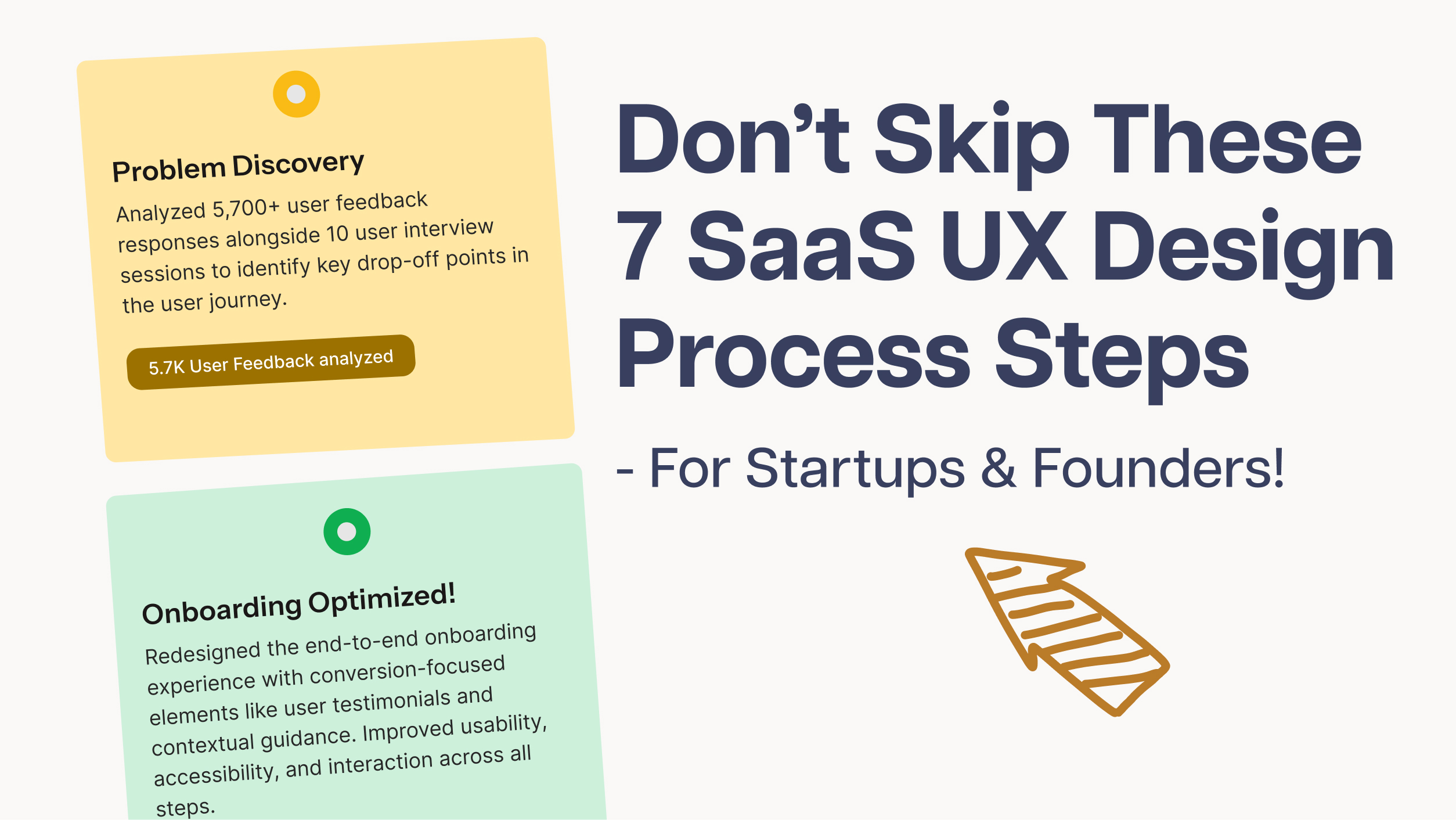
Our SaaS UX design process guide explains each step in more detail.
Red flags when hiring an offshore UX team
- No SaaS-specific case studies, only marketing websites or Dribbble shots.
- No named senior designer; you only ever talk to a salesperson.
- Reluctance to sign an IP assignment or NDA.
- Files kept only in the agency’s own accounts.
- Vague deliverables such as “UX improvements” with no list of screens or flows.
- No stated overlap hours.
How to check quality before you commit
- Start small. A fixed-price audit of one flow shows how the team thinks and communicates before a larger contract.
- Read real case studies. Look for the problem, the process and a result. For example, our SkilledScore case study and Plotter case study.
- Ask for references you can contact, ideally in your country.
- Check third-party profiles such as Clutch, while keeping in mind that newer or smaller teams may have few reviews.
What it costs
Offshore pricing varies widely, so compare what is included rather than just the hourly rate. For reference, ProDesign publishes its prices: a Micro UX Audit is $1,499 (3 days), a Detailed UX Audit is $2,999 (7 to 10 days), and SaaS UX and product design projects start from $3,000. For how agencies compare, see our best SaaS UX design agencies guide.
Making the first month work
The first month sets the pattern for the whole engagement. A few habits help:
- Share context early. Give the team access to your product, analytics, support tickets and any user research before the kickoff, so the first week is spent on your problems rather than on access requests.
- Name one decision-maker. Feedback from five people with different priorities slows any team down, and the delay is bigger across time zones.
- Agree the definition of done. For each deliverable, write down what “finished” means: which screens, which states, and which file format your developers need.
- Review against a metric. If the goal is activation, judge designs by whether they shorten the path to the first moment of value, not by visual taste alone. Our guide on SaaS user activation explains how to define that moment.
- Hold a short retrospective. After the first milestone, spend twenty minutes on what to keep and what to change in the way you work together.
Teams that do this usually find the time difference becomes an advantage: you review in your morning, and revised designs are ready the next day.
Frequently asked questions
Is it safe to hire an offshore UX team?
Yes, with the right contract. Use an NDA, a clear IP assignment, files in your own workspace and milestone-based payments.
How much time-zone overlap do we need with an offshore design team?
Two to four hours of overlap a day is usually enough for live reviews, supported by daily written updates and recorded walkthroughs.
Who owns the designs made by an offshore agency?
You should, on payment. Make sure the contract assigns all IP and files to your company.
How do we test an offshore UX team before a big project?
Start with a small fixed-price project, such as a UX audit of one flow, and judge the findings and communication.
Does ProDesign work with US and Canadian SaaS companies?
Yes. ProDesign, founded in 2017, has an office in Miami and a delivery studio in Gujranwala, Pakistan, and works remotely with SaaS teams in the US and Canada.
Want to talk it through? Book a free 15-minute call.