Most SaaS founders come to us saying they need a total redesign of their product. We get it. A UX redesign can improve a lot of conversion factors, and it also makes your product feel premium. However, a full redesign isn’t always the smartest first move. Sometimes a focused UX audit is all you need to find out what’s actually stopping users from signing up, activating, or upgrading.
The stakes are real, too. In fact, McKinsey’s Business Value of Design study tracked 300 public companies over five years and found that the top design performers grew revenue 32 percentage points faster than their industry peers. So the real question isn’t whether design matters. Instead, it’s which kind of design work your SaaS product needs right now.
Let’s break it down.
What Is a UX Audit and When Does Your SaaS App Need One?
A UX audit is an expert review of your existing product. It’s ideal when your MVP is built and ready to launch (or already live), and you want to know which areas of your SaaS app need UX, usability, and accessibility improvements before you spend more on development.
Think of it as a health check for your product. During the audit, we walk through your user flows, app screens, button labels, and workflow bottlenecks, and then we score every issue by severity so your team knows exactly what to fix first.
So how much can a UX audit actually find? According to Jakob Nielsen’s research at Nielsen Norman Group, a single expert evaluator finds only about 35% of usability problems, while a small panel of three to five evaluators uncovers around 75%. That’s why a good audit needs an experienced team rather than one pair of eyes. Better still, Nielsen documented one heuristic evaluation with a benefit-cost ratio of 48, meaning roughly $10,500 spent for about $500,000 in expected benefits.
Questions a UX Audit Answers for SaaS Founders
Can users sign up for my product easily, without friction?
How seamless is my onboarding flow?
Are there any bottlenecks or hiccups in my checkout or plan-upgrade flow?
Are all forms inside my app (login, sign-up, billing address) working and validating properly?
How good are the usability and accessibility of my SaaS product?
Can my dashboard be improved with clearer icons and better button labels?
Are my UI cards, buttons, and components consistent across web, iOS, and Android?
How fast and efficient does my product feel to use?
Why Small UX Audit Fixes Pay Off Big
Small fixes add up quickly, especially in money flows. For example, Baymard Institute’s checkout usability research shows that roughly 70% of online carts are abandoned, and the average large site can gain a 35% increase in conversion rate through better checkout design alone. The same logic applies to your SaaS pricing page and upgrade screens.
Accessibility is another common blind spot. The annual WebAIM Million report consistently finds detectable WCAG failures on over 90% of the top one million home pages. For products selling in the U.S. and Canada, that means both legal risk (ADA and AODA) and lost users.
Do you need a UX audit for your SaaS product? Let’s find the hidden usability issues before your users do. Get a SaaS UX Audit →
What Is a UX Redesign of Your SaaS Product?
A UX redesign is a complete overhaul of your current product, including branding, colors, icons, information architecture, and user flows. In other words, you don’t just fix usability and button labels. You also rethink the onboarding UX, the dashboard, and the checkout experience from the ground up.
As a result, we remove unnecessary hurdles from the onboarding and checkout flows and usually redesign the whole app. It’s a full revamp and, in some cases, a complete reskin of your SaaS product.
Because a redesign is a bigger investment, it should always be backed by some form of user research. Fortunately, research doesn’t have to be expensive. NN/g’s famous study shows that testing with just five users reveals about 85% of usability problems.
Signs Your SaaS Product Needs a UX Redesign
Your product is good, but users find it confusing to use.
You’re getting poor reviews on the Apple App Store or Google Play Store.
App usage dropped sharply after launch.
Your interface was built on a free UI kit and looks like hundreds of other SaaS apps.
Your brand and UI don’t match the premium price you’re charging.
Most SaaS founders go for a UX redesign after launch, because that’s when real user pain points finally show up. Waiting too long is costly, though. According to Wyzowl’s onboarding research, 8 in 10 users say they’ve deleted an app because they didn’t know how to use it.
Questions a UX Redesign Answers for SaaS Founders
Why is our SaaS product getting poor reviews?
Why do users keep complaining that they can’t use a key feature?
Is our onboarding flow stopping users from getting value from the app?
Why did we see a big drop in app usage after launch?
Why do users stop using the app after sign-up and never come back?
Does our SaaS product really look premium and top-notch?
Are our UI elements, buttons, and action labels easy to understand?
Does the dashboard show the data users need, or is it confusing?
Onboarding deserves special attention here. Wyzowl also found that 86% of people are more likely to stay loyal to a business that invests in onboarding that welcomes and educates them. That’s why our Onboarding UX work is often the first part of any redesign.
Real Example: SkilledScore’s SaaS UX Redesign
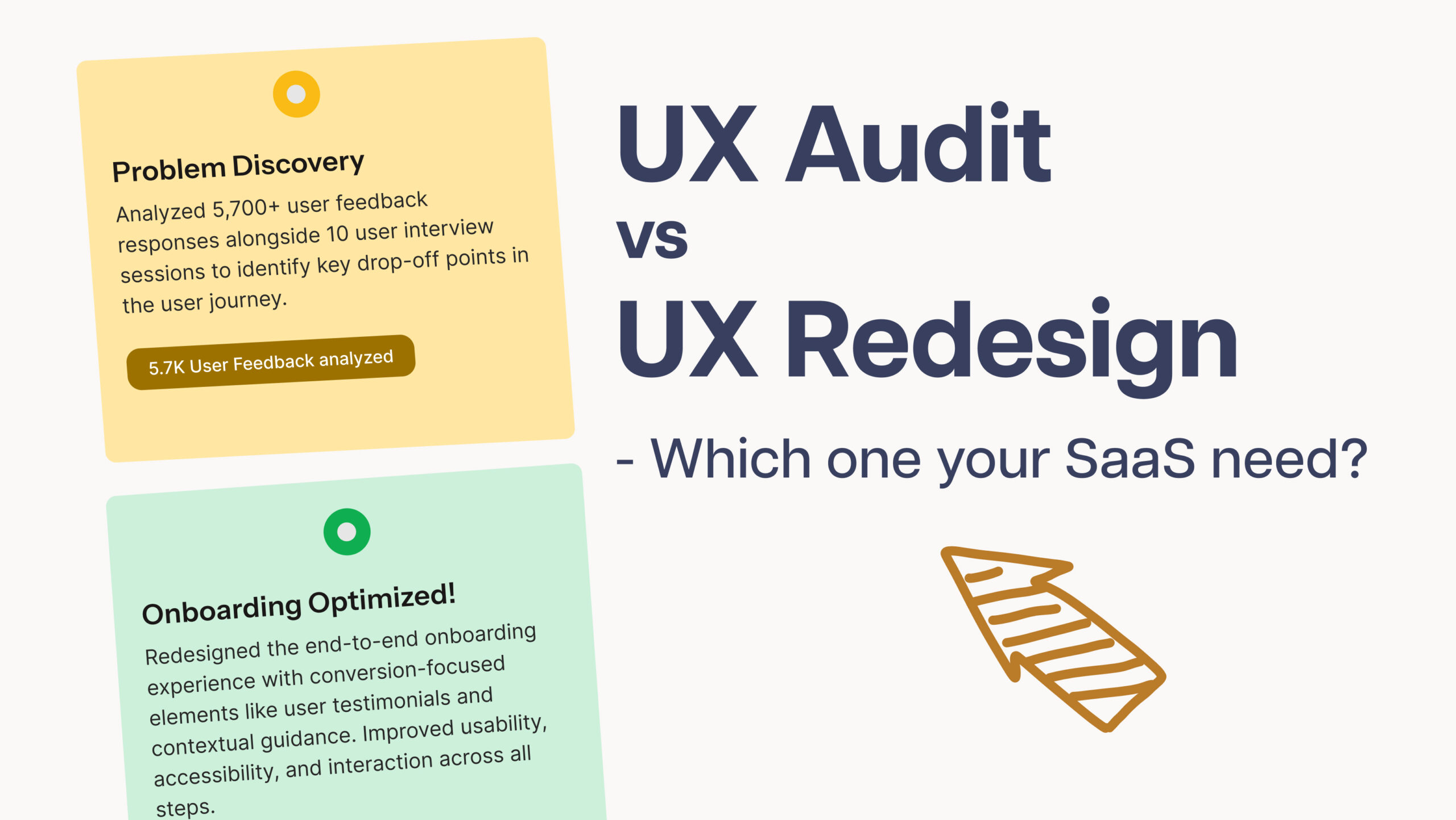
SkilledScore is a U.S.-based AI career advisor for fresh graduates. Its original interface was built on a free UI kit, and users were struggling right from sign-up. First, we ran a UX audit that flagged 17+ usability issues in onboarding alone. Then, we redesigned the onboarding flow and the SaaS dashboard with a simpler, personalized experience. The result? SkilledScore got 30+ premium memberships in the first month after launch.
UX Audit vs UX Redesign: A Quick Side-by-Side Comparison
UX Audit
UX Redesign
Best for
New MVPs or live products that mostly work (Just before SaaS launch)
Products that confuse users or look outdated – Getting Poor User Reviews
Scope
Review of flows, screens, labels, accessibility
Full overhaul of UX, UI, branding, and flows
Output
Prioritized list of issues and fixes
New designs, prototypes, and a design system
Timeline
Typically a few weeks
Typically one to six months
Budget
Lower, focused investment
Higher, full-scale investment
Risk
Low: you fix what’s proven broken
Higher if done without research
Our Advice: Start With a UX Audit, Then Redesign What Matters
In most cases, the smartest path is to audit first. A UX audit gives you a clear, prioritized list of problems. If the issues are mostly surface-level, your team can fix them quickly and move on. On the other hand, if the audit reveals deeper problems in navigation, onboarding, or branding, it becomes the blueprint for your redesign, so you never redesign blindly.
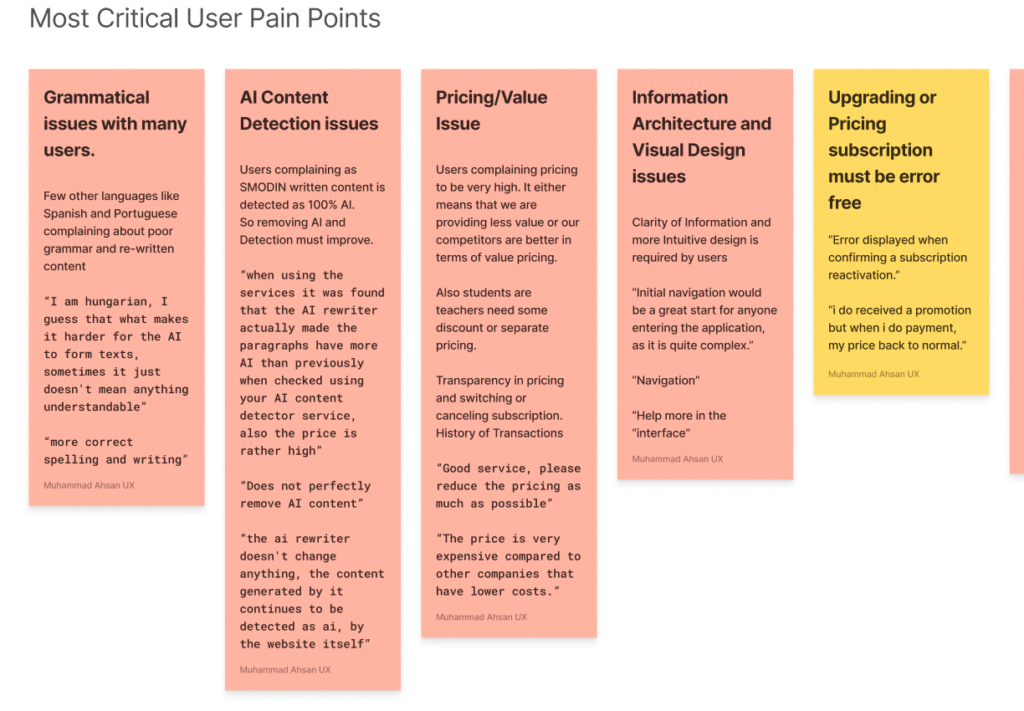
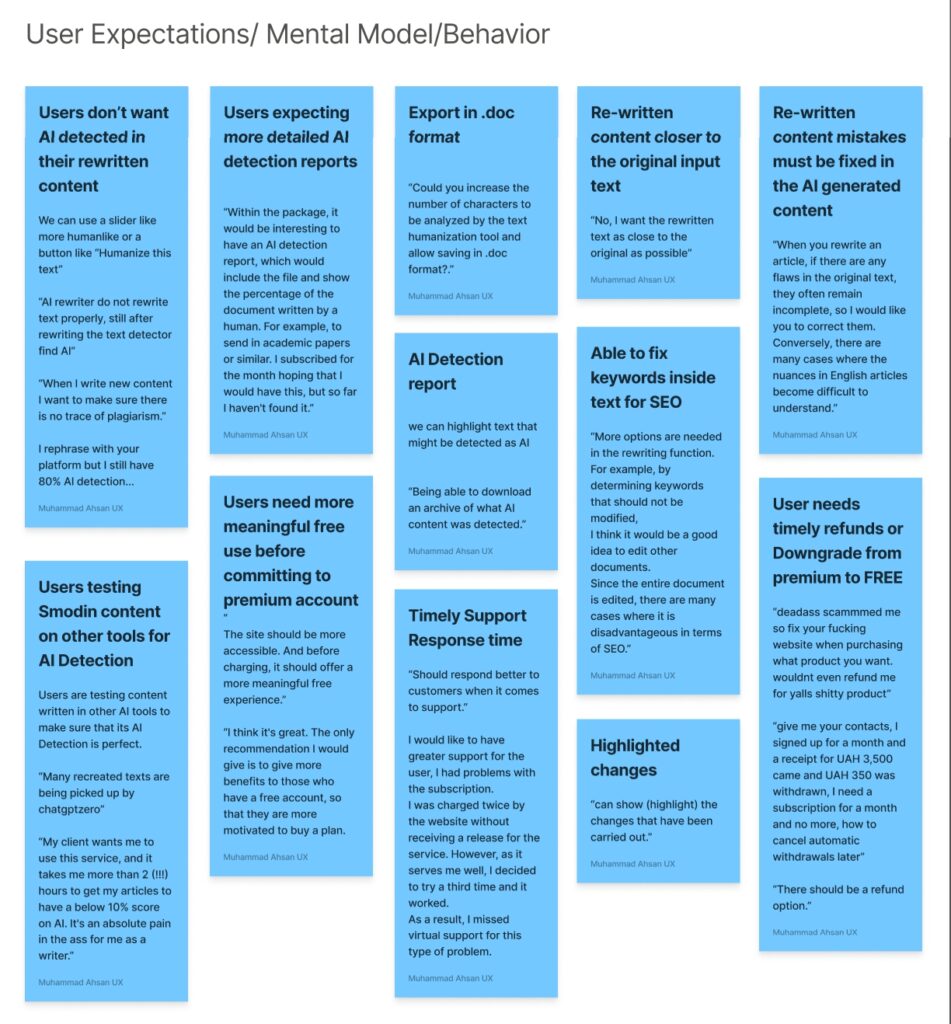
That’s exactly how we worked with SkilledScore, and it’s also how we approached the Smodin AI Writer app, where our audit of session recordings surfaced 37+ usability issues before any redesign began.
Here’s a simple rule of thumb:
Choose a UX audit if your product works but conversions, activation, or retention feel lower than they should.
Choose a UX redesign if users are confused, reviews are poor, or your UI no longer matches your brand and pricing.
Fix your landing page too if sign-ups leak before users even reach the app. Our landing page design for startups service covers that side of the funnel.
Final Thoughts: Get Your SaaS UX Audit Before You Rebuild
A redesign without research is just an expensive guess. Meanwhile, a UX audit tells you exactly where users struggle, so every design dollar goes toward growth.
Your users already know what’s broken in your product. Let’s make sure you know it too.
What is the difference between a UX audit and a UX redesign?
A UX audit is an expert review of your existing product that produces a prioritized list of issues and fixes. A UX redesign is a full overhaul of UX, UI, branding and flows that produces new designs, prototypes and a design system.
Should I do a UX audit before a redesign?
In most cases, yes. If the audit finds mostly surface-level issues, your team can fix them quickly. If it reveals deeper problems, it becomes the blueprint for the redesign, so you never redesign blindly. See our UX audit.
How do I know my SaaS product needs a redesign?
Common signs are that users find a good product confusing, poor app-store reviews, a sharp drop in usage after launch, an interface built on a free UI kit, or a brand and UI that do not match your pricing.
How long does a UX audit take compared with a redesign?
This post puts a UX audit at typically a few weeks and a redesign at one to six months. At ProDesign a focused Micro UX Audit of one flow takes 3 days and a Detailed UX Audit takes 7 to 10 days; see what a SaaS UX audit costs.
Is a UX audit cheaper than a redesign?
Generally, yes. An audit is a lower, focused investment with low risk because you fix what is proven broken, while a redesign is a bigger, full-scale investment that carries more risk if done without research.